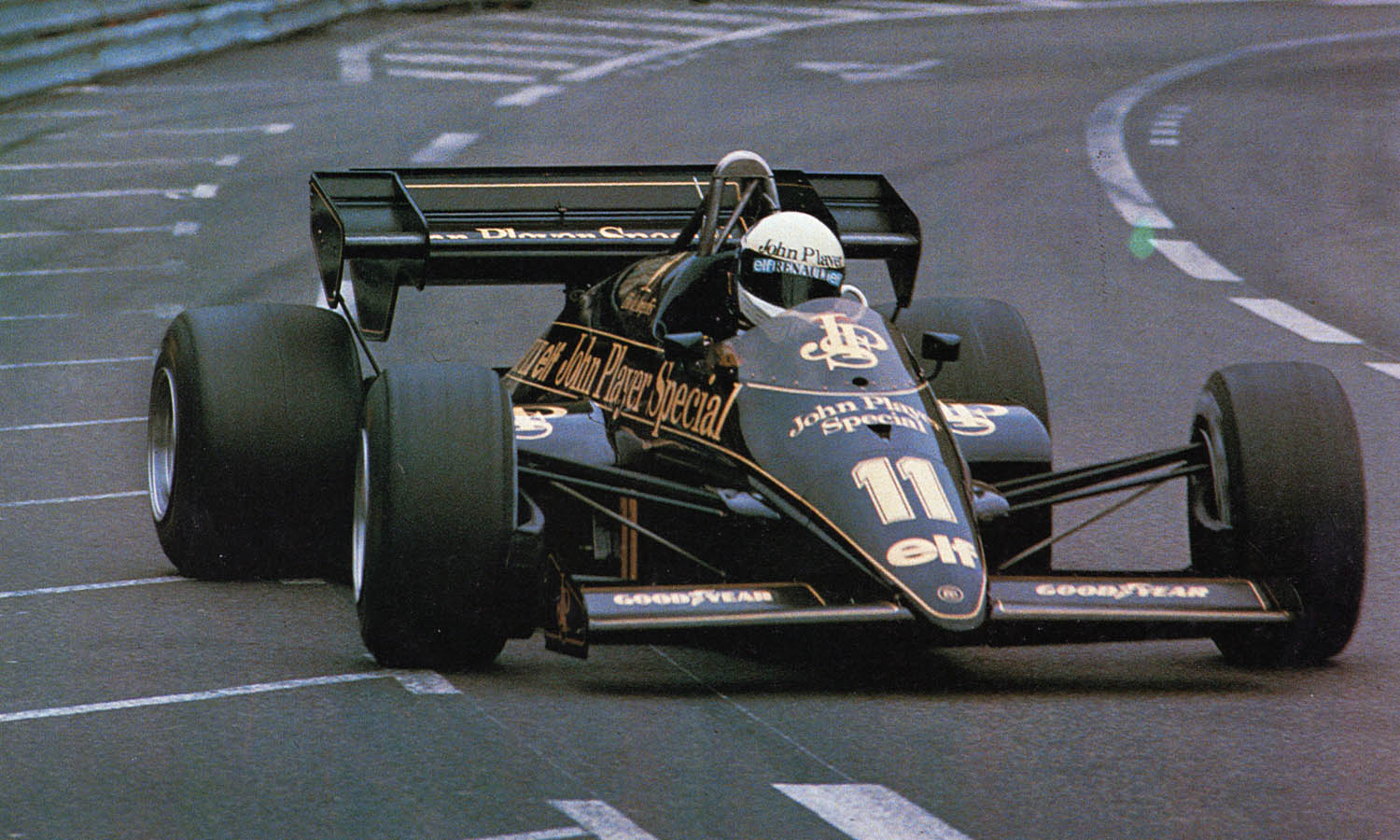
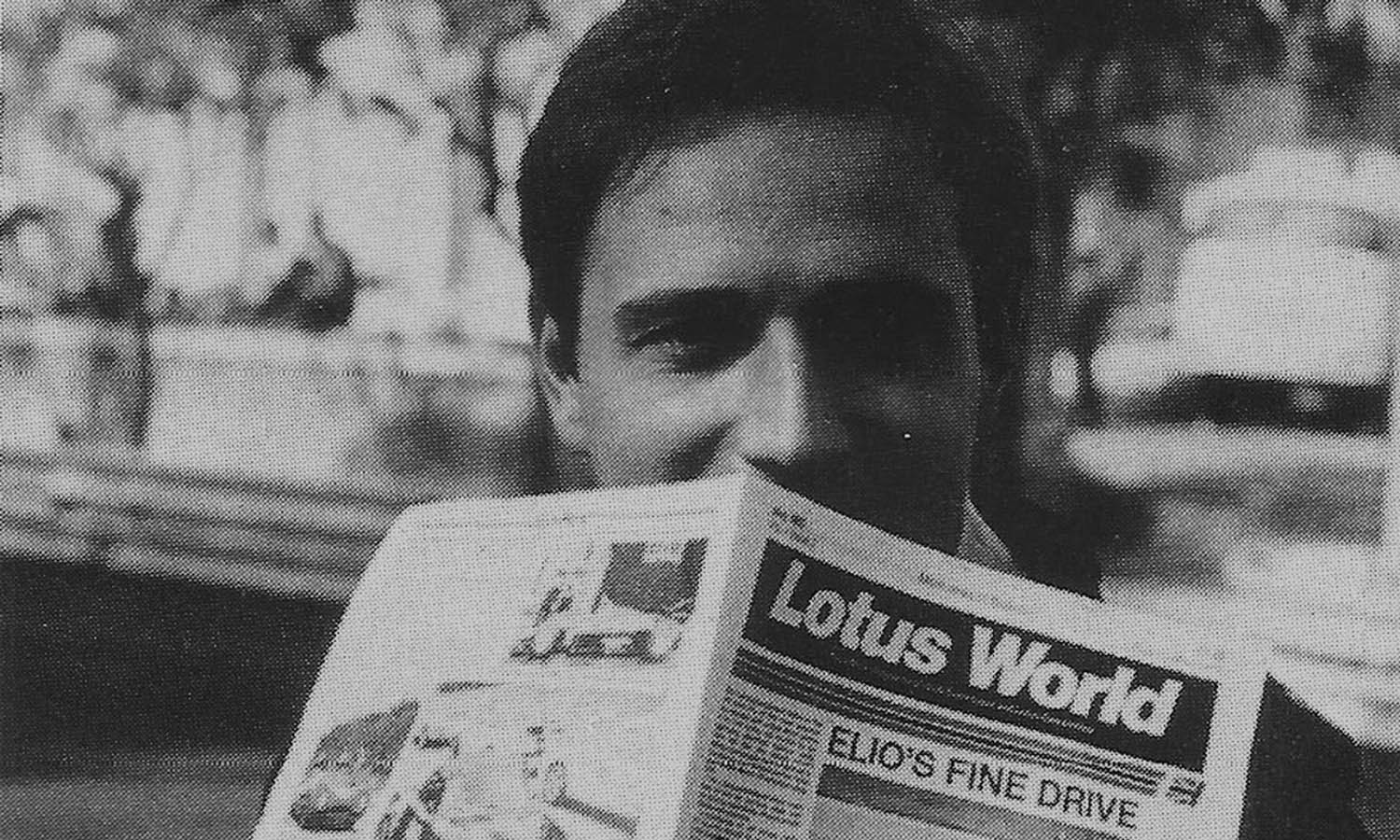
On the eve of the resumption of the racing season, we take a closer look at Elio De Angelis, the young Roman driver who suddenly made front-page news with a sensational result in the Brazilian Grand Prix. He talks openly and cheerfully about his life as a man and as a racing driver, his private habits, his loves and his aspirations of becoming World Champion.
Translated by this website

AFTER THE LONG break during February, Formula 1 will restart on March 1st with the South African Grand Prix at Kyalami. In the first two races of the season, Alan Jones, driving a Williams, won the Argentine Grand Prix, while victory in Brazil went to René Arnoux in the turbocharged Renault. At Interlagos, however, the surprising and unexpected performance came from the young Roman Elio De Angelis, who finished second. At present, the Formula 1 World Championship standings are led by Jones of Australia with 13 points, followed by Arnoux of France with 9, De Angelis and Piquet of Brazil with 6, Rosberg of Finland with 4, Prost and Pironi of France with 3, Giacomelli of Italy with 2, and Patrese of Italy with 1.
I wonder whether, at 300 kilometres per hour, he feels he has discovered a means of escape. Being hopelessly lazy myself, I recoil at the thought that Elio De Angelis might destroy in a single instant everything he has already created in his life as Formula 1’s young gentleman. I ask whether fear sometimes outweighs hope, and I try to imagine him beside a beechwood fire, the stove crackling and the flames flickering, as he tells stories scented with petrol, overheated tyres and electrical failures.
No, what has that got to do with anything?
Better to remain here, in a bar on Via del Tritone, looking out at the madness of Rome’s rush-hour traffic, where the curses of motorists trapped in long queues reach us only faintly as they torment their horns. I have to confess to him that I have often fled from racetracks because I understood nothing of what was happening and came away with nausea and a splitting headache.
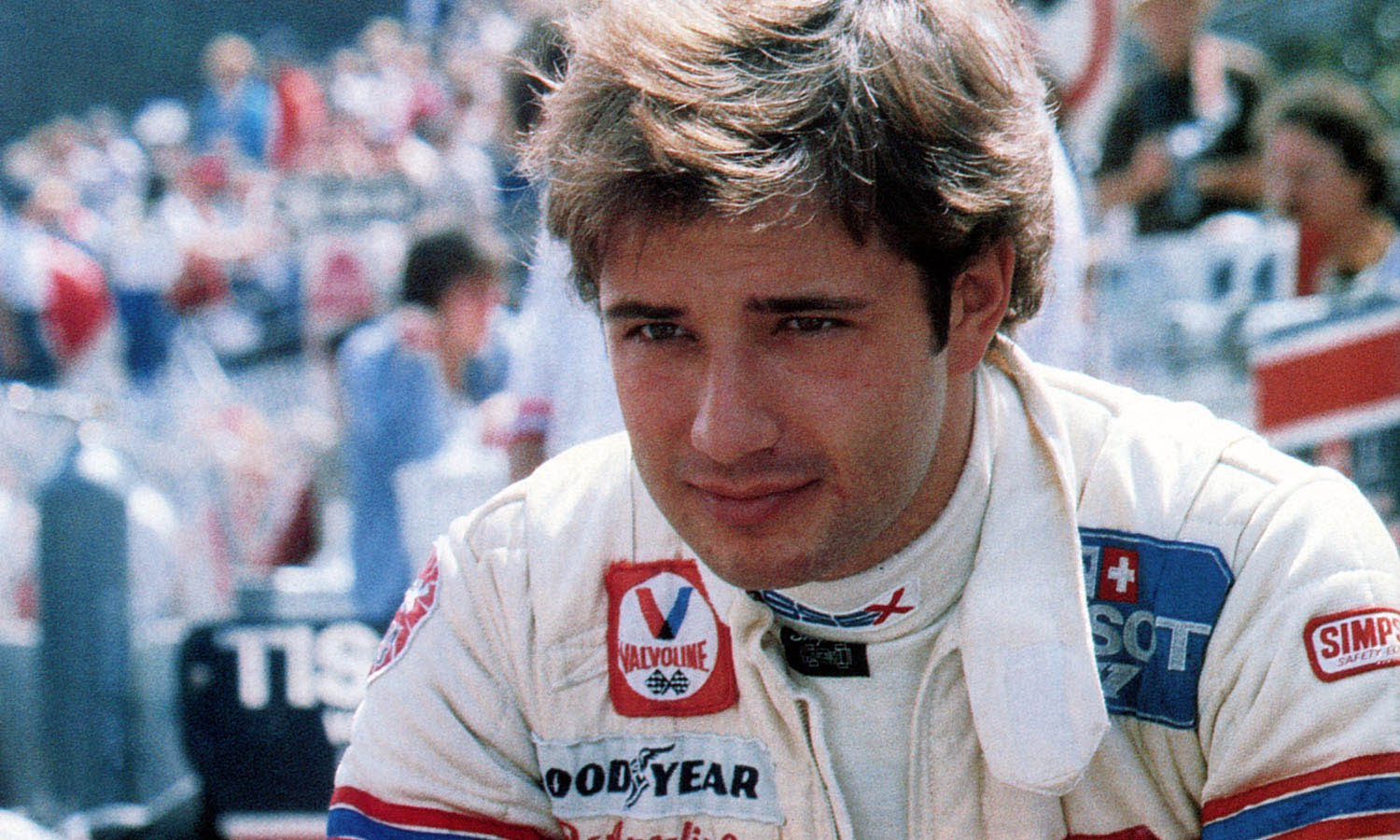
He is handsome, with curly hair and the sort of physique that might inspire a lady’s passing fancy. Out of good manners he listens, though he timidly disagrees when I suggest that what he does is not an artistic sport in the way that tennis, football, fencing, boxing or horse riding can be.
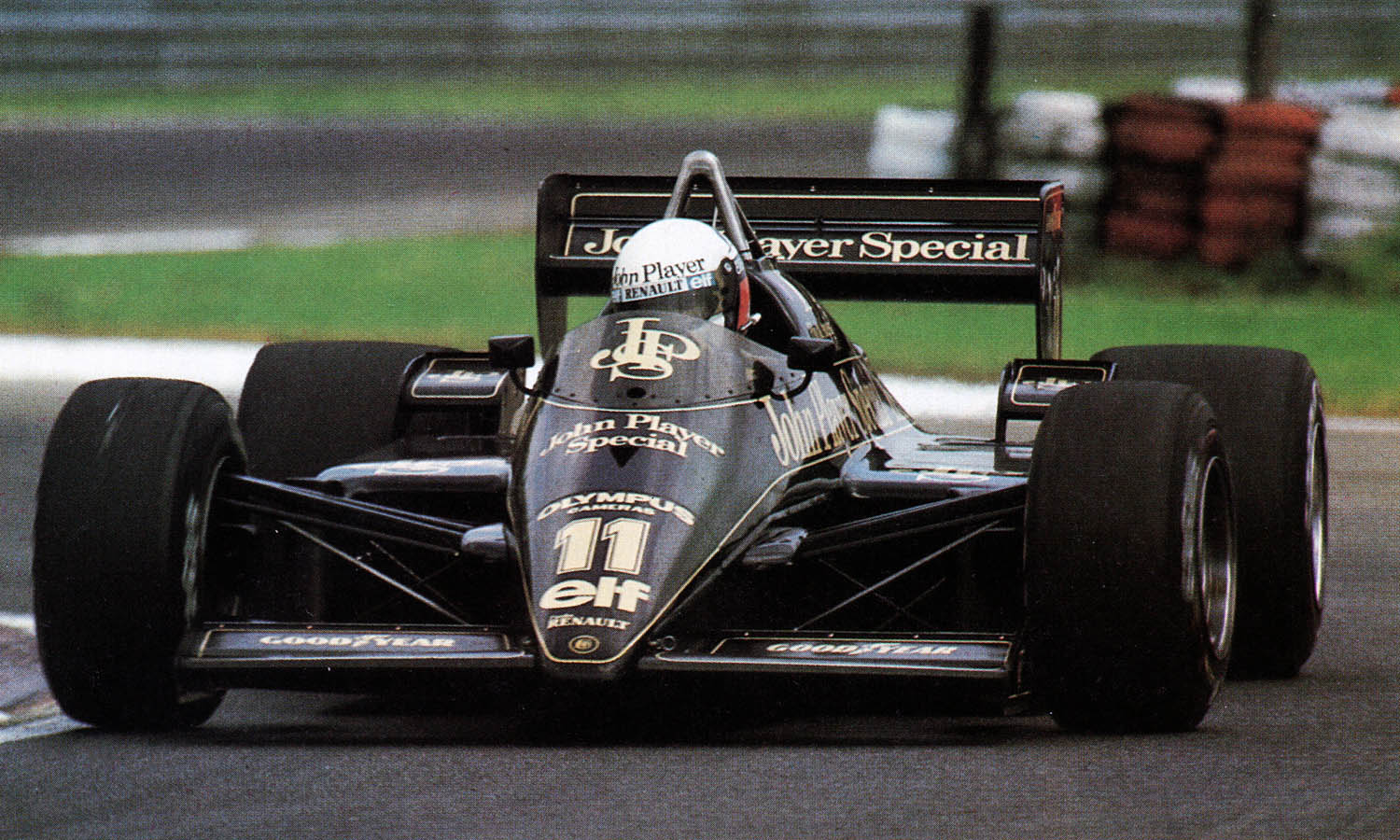
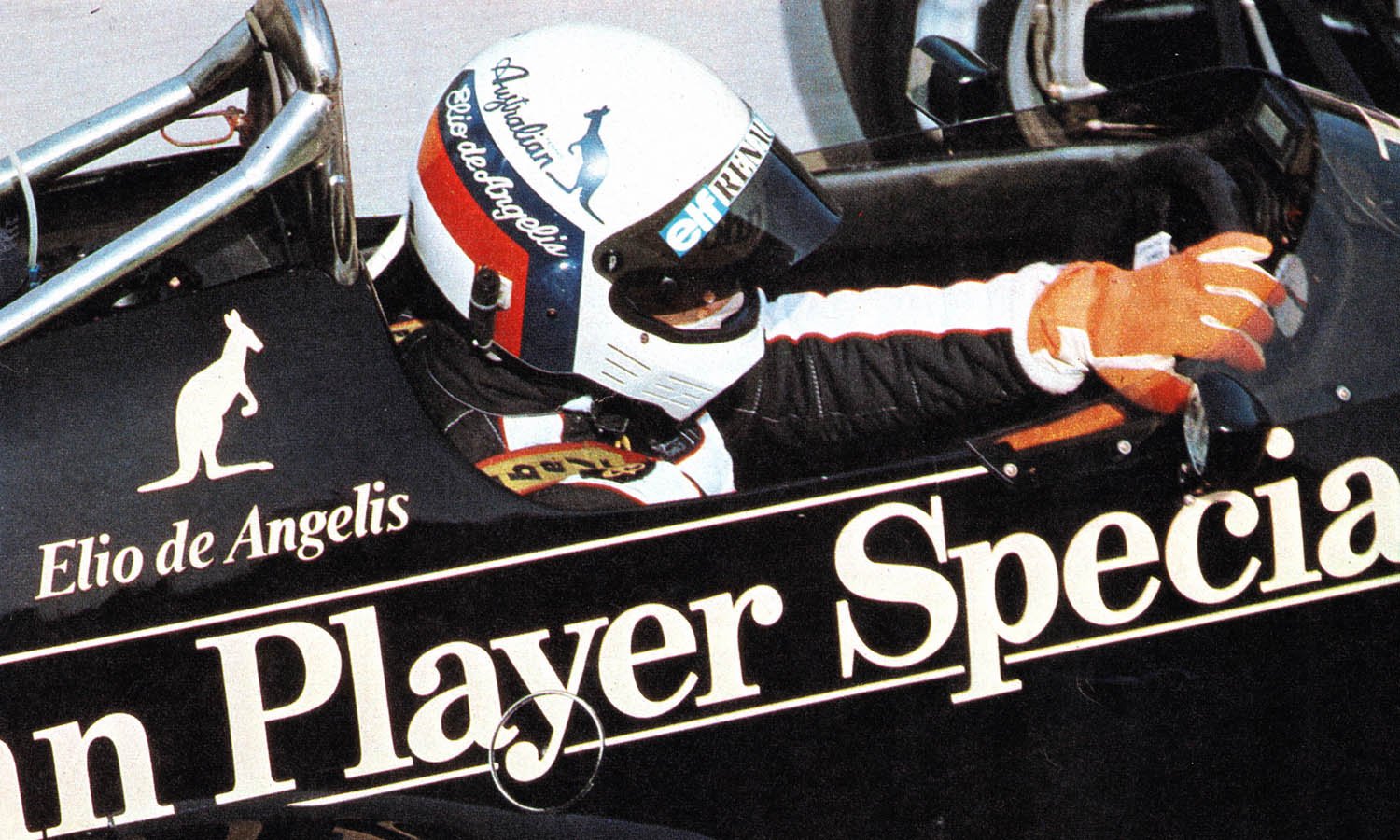
“No, he interrupts me. You’re wrong. Anyone who becomes a champion is creating art in some form, even when the medium is numbers, figures, power, speed, geometry and mathematics. The difficulty is becoming a champion and then remaining up there among the specialists. Will I succeed? That is the only thing that troubles me. Perhaps the Brazilian Grand Prix last month has already spoiled me a little? No, no… I know that second place in Brazil could have been a victory, and above all I know it was no accident. My Lotus will not betray me. I know everything about her. I talk to my car… We have established a dialogue. She is what allows me to play the game. For me, racing – being a racing driver – is a game. My Lotus and I have achieved a wonderful union…”
The Man Himself
He will turn 22 on 26 March. He is solidly built, almost chubby, his tan complementing his cashmere sweater.
Motor racing runs in the family, although he admits this almost reluctantly, as though unwilling to reinforce the image of the privileged golden boy – the young gentleman who, in record time, has been able to enter and excel in the extraordinarily difficult world of motor racing thanks to his father’s financial support and seemingly limitless generosity. His father is a prosperous building contractor and a former powerboat racing star.
“No, what does that have to do with anything?” he interrupts me again, sensing what I am about to imply.

“When you are travelling at 300 kilometres per hour, connections and recommendations mean nothing. The only person you can appeal to then is Almighty God.
If you do not possess genuine talent, courage, class and determination, there is no point in persevering. Do you know why I left Shadow?”
No. Why?
“Because I already felt older than my years, yet they treated me too much like a boy. For an entire year I suffered. I swallowed humiliations and endured one fright after another. I could not talk to that car, and I certainly could not develop any confidence in it. It was fragile. At 200 kilometres per hour, it always seemed possible that a wall might suddenly appear in front of me. Yes, racing drivers become frightened too. We are human beings, flesh and blood. I became frightened once too often, and at that point I fell out with the car. I said enough.
Fortunately, Lotus then approached me. Colin Chapman himself wanted me. There were no problems. I remembered that he had come over to congratulate me after practice at a British Grand Prix, and later, in the United States, the first serious approaches were made. So, I terminated the contract that tied me to Don Nichols’s Shadow team until 1981 and paid the penalty clause. No, it is not true that I paid 150 million lire for my freedom. It cost me considerably less. But journalists, wanting to show that I could afford anything, simply invented the figure.”
The Golden Boy
I tell him that I am not particularly interested in knowing how much it cost him to join and excel with the famous team that had already enabled Clark, Graham Hill, Fittipaldi, Rindt and Andretti to become World Champions. I add that in this country, forever obliged to invent new heroes, he has suddenly become a leading figure: the “golden boy” who has restored Italian drivers to prominence in Formula 1.
I remind him that, after his magnificent and unexpected second place behind Arnoux, the statisticians had to look back to Vittorio Brambilla’s victory in the 1975 Austrian Grand Prix and Riccardo Patrese’s second place in Sweden in 1978. Those had been the most recent Italian achievements of note, while suspicion had grown that young Italian drivers were being permanently shut out by the vested interests of older drivers and those responsible for the country’s racing organisations, leaving them no choice but to resign themselves to the situation or seek opportunities abroad.
“If you are referring to Ferrari, he interrupts again, politely and almost solemnly, you should know that I prefer evidence and facts to controversy and regrets. I always look forward. It is a way of life that I learned from my family, perhaps especially from my father. Yes, so far I have not been a prophet in my own country, but that does not mean I could not become one someday. I may yet return. Who knows what will happen tomorrow?
It seems to me that I am burning through the days. Everything is incredibly beautiful, incredibly intense, incredibly worth living. I was born for cars. As a child my room was covered with posters of my heroes. My first experiences, when I was still in short trousers, were in karts. Then I tormented my father until he finally allowed me to move into Formula 3. I drove a March-Toyota, and the principal sponsor was ‘De Angelis Costruzioni Edili’, my father’s construction company. But how else could I have started?
In Italy we lack sponsors willing to support young drivers while they are developing – people prepared to take a chance and invest without knowing what the outcome will be. Then, as soon as you begin producing results, everybody rushes in wanting to sponsor you. But that happens in almost every sport. It is a question of mentality.
Ah yes, we were talking about Ferrari. There was far too much speculation, too much gossip and too many predictions at the time. Two years ago I tested for Ferrari. It was a T3. People swore that Maranello wanted to sign me. It turned out as it did. We could not reach an agreement. Perhaps it was simply fate.
Besides, I did not particularly like the Ferrari I tested. I sensed that I would never be able to ‘talk’ to it, that I would never become truly comfortable with it, that it could never become the car closest to my heart. It was not a wing car like the Lotus. It did not have the extreme aerodynamic characteristics that I liked, and it demanded a different style of driving.
With Lotus, by contrast, I have found what I was looking for. Now I want to win a Grand Prix and finish among the top five or six in the World Championship. We shall see what happens in South Africa. There is so much – perhaps too much – parity among five or six cars: Renault, Ferrari, Lotus, Williams, Ligier. But perhaps I… No. I do not want to think about it, although I have faith. Genuine faith.
I am a believer. Whenever I can, I attend church on Sundays, wherever I happen to be, and I keep holy cards and rosaries in my Lotus. Saint Teresa, or some other saint, might intercede for you. You can pray even amid the mad, obsessive rhythm of those terrifying accelerations…”
The Idol

Away from Chevron-Ferrari he went, quickly and without hesitation, ignoring those who claimed that his career had already been “burned out” before it had even begun. Could this much-discussed Elio De Angelis really be a tough character beneath the soft outward appearance of the pampered golden boy?
For a moment the question catches him off guard. Then, smiling, he answers:
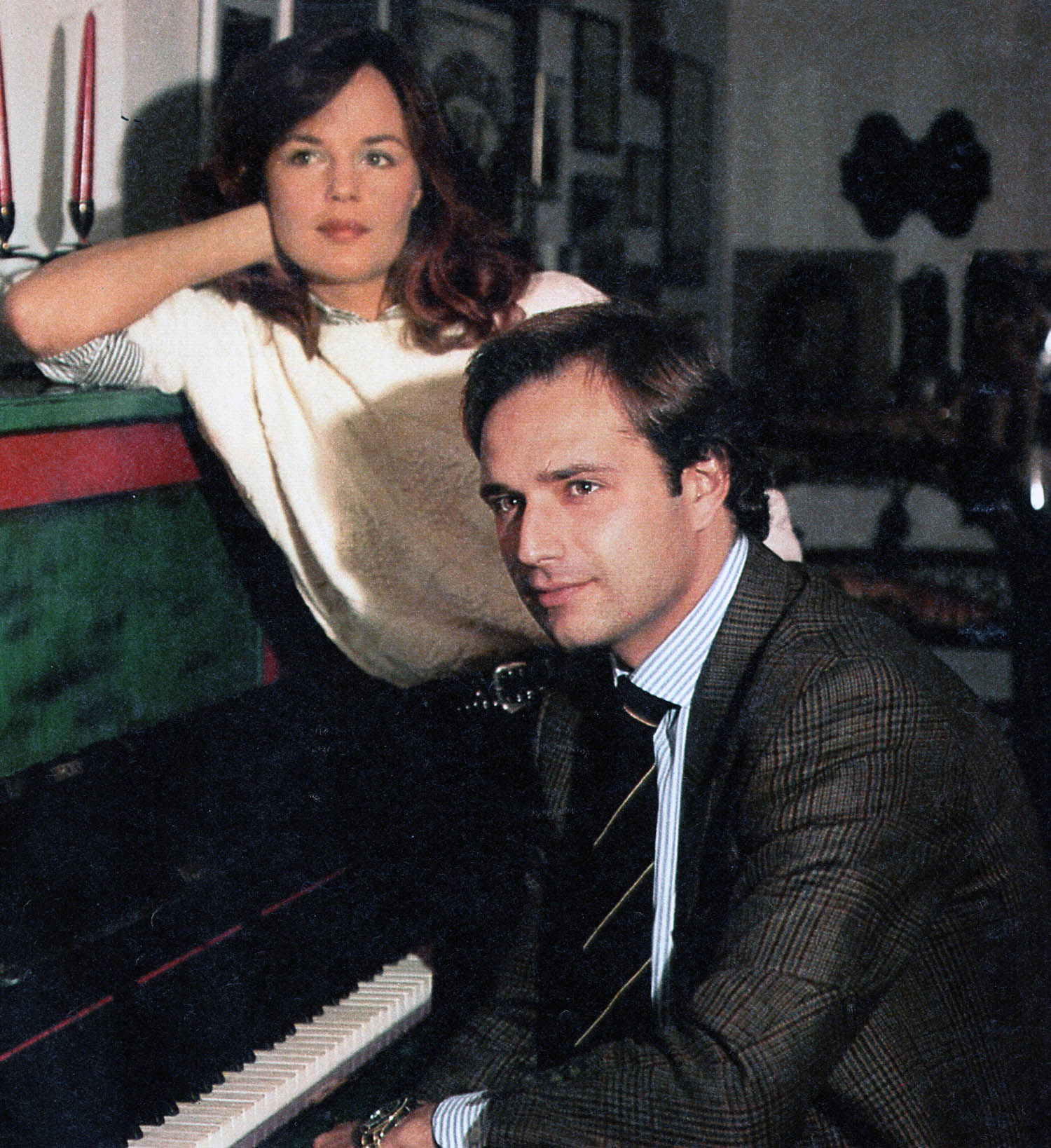
“You would have to ask my father Giulio, the people who know me, or my girlfriend Cristina. As far as I am concerned, I would say no. I consider myself sentimental. I love classical music, and playing the piano brings out the emotional side of me. If I arrive at a hotel with a piano, well… I cannot resist. I ask whether I may practise and perhaps play a piece or two. I also enjoy pop music very much. Music allows me to escape from the tensions of travelling, transfers, interviews, schedules that must be kept, competition and professional jealousy.”
In Rome, he has become an idol to teenage girls, the new model of the fashionable “Vogue man”, the successful young gentleman.
For the affluent youth of Parioli and Vigna Clara, for the well-to-do young crowd and devotees of disco music and racetracks, he is the new champion, the idol in the saddle, the Prince Charming who, one might joke, is “not for women over eighteen.”
“But I do not even notice it, he replies, embarrassed. I do not have the time. And I have my girlfriend. We understood one another immediately, instinctively, just as I did with the car. She is happy to share me with the other woman – the Lotus – and I am grateful to her for being so lovingly understanding.
For many years yet she will not be able to have me entirely to herself, so there is no point making plans, thinking about marriage or starting a family. These days my homes are hotels.
Soon there will be the South African Grand Prix, practice, nerves, timing. I enjoy myself enormously. I never get tired of it. When I finally begin to feel tired, I shall start thinking that perhaps it is time for a change. But for the moment, I dream with the Lotus in a way I dream nowhere else.”
A Team for Two
He dreams of becoming World Champion. When he returned from Interlagos, he was welcomed at Fiumicino Airport like a triumphant hero. His response was: “This is far too much. I do not deserve all this yet. Wait until I win… I want to win. My father was a winner. I come from a family of winners. Just wait. I will win too.”
It was his only real display of vanity.
That was at the end of January, at the beginning of this extraordinary year. Afterwards he rested and returned to his everyday life: marathon sessions in front of the television, pop music, playing the piano, and walks with Cristina through Villa Borghese in the mild air of the approaching spring.

“Only when I am resting, I realise that I am barely 22. In the racing world, on the other hand, I prefer to feel older than I am, and perhaps that is why Clay Regazzoni once said that we young drivers behave like old men in Formula 1. That is not really true. I adapt easily. I am perfectly capable of laughing, telling jokes and drinking champagne. But I am equally ready to respond with reserve and distrust if I encounter neither friendship nor warmth around me. That is all.
I must say, however, that things in the paddock are better now. My closest friend is my teammate Andretti. No, our relationship has not changed after Interlagos. There is cooperation and mutual respect between us at every level. Our team works very well together. In Brazil I went there as the number-two driver and ended up ahead of Andretti. So what?
He remains the number one, of course. There is no question about that. He has given me a great deal of advice. He is a genuine friend. And in this world, anyone who finds a true friend has found something very rare and precious. I understood that very quickly.”
For the moment, that is where the story ends. I am convinced that these are only the opening pages of a great novel. And, I confess to him, some of my old, almost guilty sense of nausea toward this world so saturated with the smell of petrol, the noise of racetracks and insane speed has begun to disappear.
What remains is admiration for this young man born into motor racing who refused the easy life – who did not choose idleness, the pose of the playboy, or days spent tanning himself at his father’s villa on the Costa Smeralda. If anything, he used that comfortable life as the foundation from which to invent another: one in which death is forever waiting, a life filled with moments that must be mastered and lived with one’s heart in one’s throat.
His father, mother and two brothers follow him, waiting for his return each time with anxiety they do their best to conceal. De Angelis leaves and comes back.
He travels at the very edge of 300 kilometres per hour, sending hurried postcards in his small handwriting from distant places. Then suddenly he is here again, with his dreams, his tousled hair and the fringe of a well-dressed pageboy. He appears and disappears.
It is his destiny as a racing driver and as an aspiring hero of our times.
“My brothers, he explains, started in karts just as I did, but then they gave it up. Was that the right decision? Was it wrong? I do not know, and I do not want to know. I would never encourage anyone to race, to climb into these machines the way I do. It is purely a matter of passion. Outside help can only take you so far. Once you are inside the car, you are always alone. And if you do not love the machine…”
He runs a hand through his hair and says goodbye. The beautiful and terrible game continues.
© 1980 Guerin Sportivo • By Marco Morelli • Published for entertainment and educational purposes, no copyright infringement is intended